
A Country Almost Independent from Oil and Gas
Uruguay, a nation of 3.5 million people, faced a severe energy crisis in 2008. Today it is seen as a climate champion. How did the country manage its energy transition — and could its model work elsewhere?
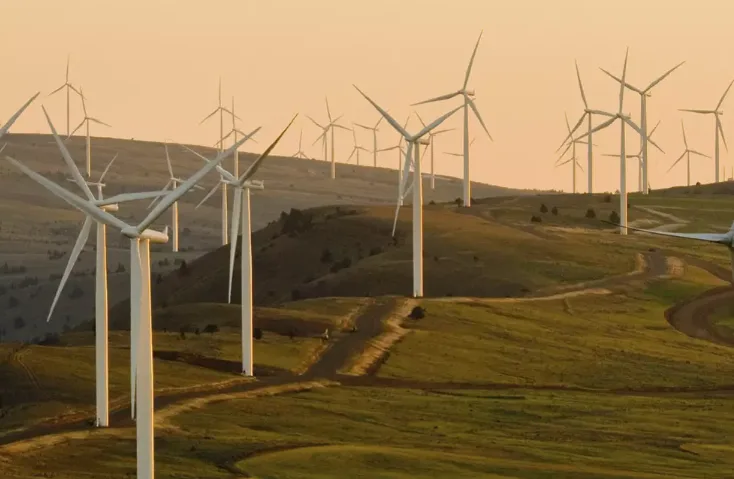
Traveling along Route 5, which cuts across Uruguay from Montevideo to the Brazilian border, one sees fields, cattle, few houses — and wind turbines everywhere. Many of them belong to engineer Fernando Schaich. He explains that in 2010 Uruguay had only a few hydropower plants and a small experimental wind turbine. By 2026, the map looks “covered in red dots,” representing renewable installations. Schaich’s company alone operates 75 turbines, about ten percent of the national fleet.
Uruguay’s electricity matrix today consists of roughly 50% hydropower, 30% wind, 15% biomass, and 3% solar. Fossil fuels account for only about two percent of electricity generation. Schaich emphasizes that this is not only sustainable but economically advantageous.
A Visionary and a Turning Point
The 2008 crisis — high prices and severe drought — pushed Uruguay to rethink its energy system. The key figure behind the transformation was physicist Ramón Méndez, who became National Energy Director. He argued that the system needed a fundamental overhaul, not minor adjustments. His approach gained cross‑party support, enabling a “New Deal” for energy.
Between 2010 and 2020, public and private actors invested around seven billion US dollars in renewables. New regulations, tax incentives, and nationwide outreach programs were introduced. Farmers and universities were included in planning, and around 50,000 new jobs were created. Long‑term demand was legally defined for 20 years, giving investors stability.
Méndez notes that Uruguay is now more secure than fossil‑fuel‑dependent countries affected by geopolitical tensions. He contrasts Uruguay’s stability with the rising costs faced by nations dependent on LNG imports.
Challenges: High Prices and Oil Dependence
Despite the green electricity boom, household electricity prices remain high — around 150 USD per month for a family of four. Many residents say they consume as little electricity as possible.
Moreover, Uruguay still imports oil, mainly for transport and industry, which together represent about 35% of the total energy mix. This has led to a second phase of transformation: electrifying transport.
The Shift to Electric Mobility
In Montevideo’s bus depot, the difference between diesel and electric buses is visible: diesel areas are dirty and smelly, while the electric charging zone is clean. Since 2021, the city has expanded its fleet exclusively with electric buses; today one in four buses is electric. The goal is 100% by 2040.
Taxi drivers also receive incentives to switch. Nearly 70% of new cars sold in recent months were electric. Uber driver Hernán Gómez reports saving around 900 USD per month in fuel costs.
Can Uruguay’s Model Work Elsewhere?
Experts say the model is not easily transferable. Uruguay benefits from strong winds, abundant sunshine, low population density, and limited heavy industry. These conditions make renewable expansion easier.
Méndez also warns that political polarization worldwide threatens long‑term planning. Uruguay’s success depended on years of broad political consensus — something increasingly rare. If every new government tries to “refound the country,” he says, everyone loses.